Spices and Spandex is a cookbook for the adventurous, the free, the curious. Delving into the culinary adventures of two young men who cycled 20 000km from London to Cape Town, its pages showcase some of the richest and most diverse food cultures and recipes in the world.
We asked the book’s creator, Tom Perkins of The Nomadic Kitchen, to shed some light on how one or two beers with a good friend in the local pub led to 501 days of pedalling, 26 countries visited and an extraordinary culinary ‘bible’ for foodie adventurers the world over.
WORDS and IMAGES by TOM PERKINS
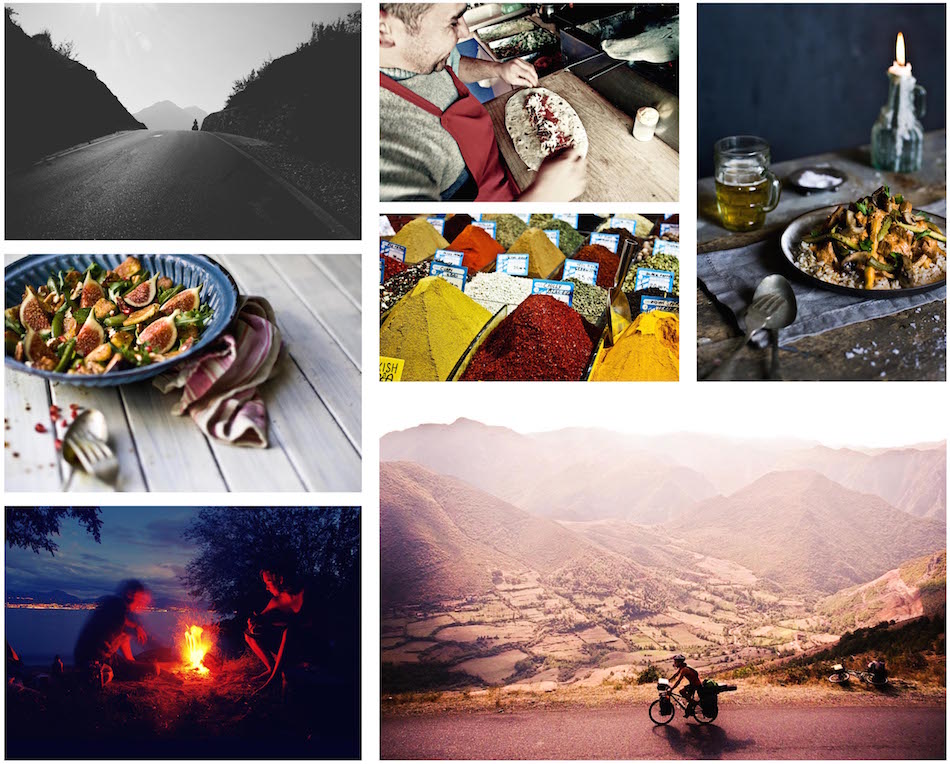
HTWE: How did your plan to cycle the long, zigzagging road from London to Cape Town first come about?
TP: To be perfectly honest, quite where the exact idea of the journey came from is still a fuzzy memory. Matt, my travelling buddy, and I were sitting in our local pub in Cape Town, wondering what was next for both of us. I made a throwaway comment. It struck a cord and gained momentum. Why don’t we just get on a couple of bikes, strap on some basic camping and cooking equipment and then hit the road. Let’s try and cycle from one local pub just outside of London back to where we are now sitting. We were young and wanted a challenge. We wanted to be exposed and become immersed in the cultures we passed through from street-level up – we thought that travelling by bicycle, in such a slow, vulnerable, physically demanding way would best facilitate this. So we told one mate of our intentions and then another. Before long we had told so many people that we had become accountable to our word – the die had been cast.
HTWE: Your book, Spices and Spandex, hit shelves about a year after your return. Were you always planning to share the tales of your journey in the form of a cookbook? How big a part did this trip play in enhancing your foodie passion?
TP: Having planned to be on the road for about 17 months I knew that I needed to have a focus and an end product that I was working towards. I thought of a project that combined all of my passions – food, travel, photography and design – and the obvious answer to me was to try and produce a cookbook with an added dimension. Something that sought to look beyond the measure of a meal being simply the sum of ingredients on a plate – and rather placed as much importance in the human element of a meal. I wanted to create a book that told stories, shared culinary experiences, introduced local characters and shed light on some lesser-known food cultures. And so the concept of The Nomadic Kitchen was born and this foodie passion grew ever stronger.

HTWE: Of the 26 countries you experienced, which country or culture did you find the most gastronomically inspiring?
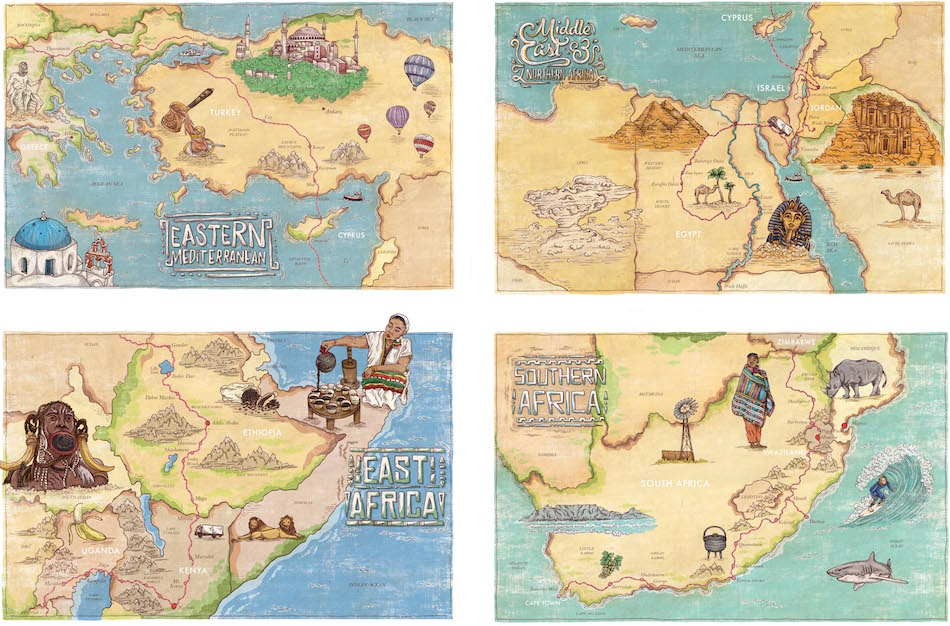
TP: It’s a very hard thing to narrow it down to an individual country – so maybe I’ll have to settle on a broader region. The Middle East and North Africa was a fascinatingly diverse and rich place in terms of its gastronomy. The use of spice, dried fruits and herbs, combined with amazing grilled meats and the respect given to all variety of fresh vegetable is just incredible. But beyond the wealth of beautifully rich, delicious and historic culinary cultures found in this part of the world, what I really love is the way that food is celebrated in a very communal way. While we found this to be the case in so many of the societies we passed through, it was especially true throughout the Islamic world. The ability to welcome a stranger into your home and share a meal with them is seen as one of the greatest honours and privileges you can be afforded as a host. Strangers are not seen as something to be fearful off, but rather they are seen as a blessing. The riches in giving are far more valuable then the riches in receiving – and food, in this part of the world, is one of the most valuable currencies.

HTWE: Which ingredient or style of cooking challenged your comfort levels the most?
TP: This might sound slightly odd, but one of the most unpalatable ingredients we tried was the center-piece of, ironically, one of my very favourite meals of the whole trip. A meal that I could barely stomach because I was so ill at the time. We were in central Turkey, had met a very hospitable and generous man named Ramazan in the local market, who immediately invited us round to his house to join him and his family for the Feast of the Sacrifice; the big meal to celebrate the end of the fasting period. We were welcomed into the family courtyard where a large tethered bull was swiftly decapitated, dismembered, perfectly butchered and then cooked right in front of us. A stew of green peppers and bull’s lung was the star of the show, followed by fresh cherries and copious amounts of black coffee. The idea of the Feast is to make sure that on one in the local community goes without food and gives thanks on that day – be they old, sick, homeless or destitute – clearly we fitted the description.
HTWE: Of all the meals you ate, which one were you the hungriest for? Talk us through the day that led up to this.
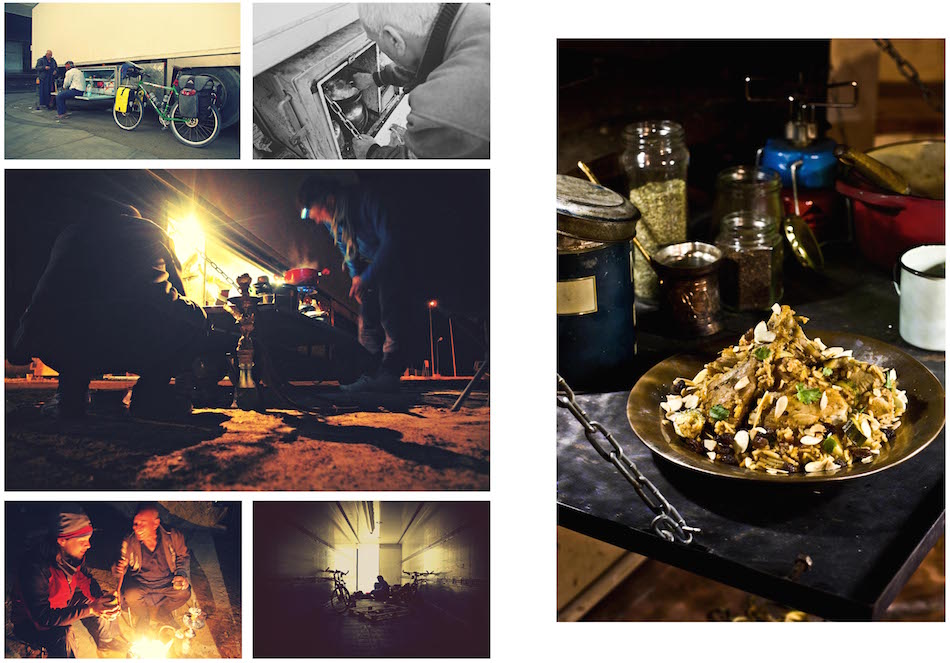
TP: The day started on a ferry crossing from mainland Turkey to Cyprus – our route heading further south had to be amended because of the circumstance in Syria at the time. We boarded the ferry at about 2am as a storm was hitting the southern Mediterranean, making our passage pretty unpleasant. After a few hours of fractured sleep we headed up on deck to be greeted by a very exuberant and forceful man named Emir. Emir insisted that we share his breakfast with him – this consisted of a bottle of whiskey, six beers, a brick of Marlboro reds and a watermelon. This did not set us in good footing as we stumbled off the ferry to be greeted with an 18km straight climb over a mountain range in the mid-day heat. All we could find for lunch was a cinnamon bun topped with an unrecognizable meaty substance. We were promptly both taken ill but still had another 40 km to cover. As evening fell our situation got even worse. It was a Sunday and no shops were open. It then began to rain. With limited options we decided the only solution to cure our woes would be to break into a building site and find refuge in the basement of a disbanded house for the evening. The floor was littered with nails, rat droppings and large puddles of water. Having found the tiniest island of relative refuge we bedded down for the night. Utterly exhausted, horribly hung-over and only armed with two oranges and a bag of peanuts – given the circumstances nothing tasted sweeter than that.

HTWE: Having now ‘set up shop’ in London, how likely are you to be able to get your hands on many of the exotic African ingredients mentioned in your book?
TP: In terms of access to an incredible array of ingredients and the diversity of the food scene, you’re completely spoilt for choice in London. It’s one of the great cities in the world for its rich multiculturalism and this is expressed so clearly in the cuisine.

HTWE: Who you travel with can be more important than your destination. Tell us a little about your travelling partner and how the two of you kept each other going for 501 days of pedalling?
TP: It can really make or break a trip and I think we just got really lucky. We completely shared a collective goal and both bought into the same method of trying to achieve it. In Matt I couldn’t have travelled with anyone more generous, supportive or fun – although I’m incredibly glad to not have to live in a awkwardly small tent with him any more. Some things you can’t un-see.
Watch the Spices and Spandex trailer video below:
HTWE: You have an incredible collection of videos and photographs from your journey – plenty of dancing across landscapes in that spandex attire! They say you should live for the moments you can’t put into words: can you pick one picture from your journey that is particularly special to you and that you feel sums up your trip?
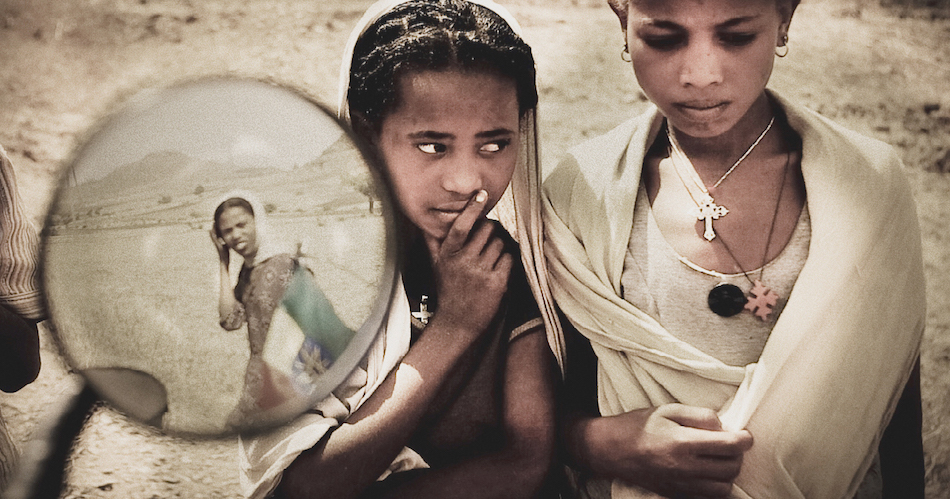
TP: Ah thanks – there was certainly plenty of amazing subject matter to shoot so that makes it much easier. Although not sure all that excessive spandex wearing would make the cut! Narrowing down a favorite one is pretty difficult but I’m a big fan of portrait photography – so capturing something quite candid is always nice. This picture of two little girls in Southern Ethiopia – the photo was taken while taking a rest on the side of the road – and wherever you stop in Ethiopia (no matter how remote) you get instantly swamped by curious onlookers. I only had time for one shot before they got embarrassed and ran away.
HTWE: If you were to cycle across the African continent again, what would you do differently?
TP: I wouldn’t want to change anything about the way that we did the first trip – even the slightly dysfunctional parts of it because they all made up the fullness of the trip. You don’t want to iron out the little or large faults as these lows make the highs. But in truth we only scratched the surface of the continent – there are countless other countries I’d love to visit, so switching up the geography of the trip would be great.
HTWE: I think we’d be wise to assume that you’ve now been bitten by the bug – so the question is not ‘if’ you will be adventuring again but rather ‘where’ and ‘when’ will it be?
TP: The next big one – I’m always scheming over maps but my focus is very set on Central and South America. Another foodie road trip from Buenos Aires to the top of Mexico, exploring as many food and drink cultures along the way. I think there is such diversity and richness to the culinary cultures – I’d love to dig a little deeper into the lesser documented ones. I’m aiming to get it started towards the end of next year, and while I have increasingly itchy feet I want to make sure all the framework is in place to make this next one even bigger and more extensively documented.
To buy the book or learn more about the adventures and recipes of The Nomadic Kitchen visit: www.thenomadickitchen.com


