WORDS and IMAGES by JEREMY GOSS
This is the story of a young rhino calf called Bahati. A little rhino that fought for his life with a poacher’s snare around his neck, while wildlife conservation organisations in the Chyulu Hills, Kenya, pulled together in an extremely demanding search to find him.
His story begins a year ago, when his mother was shot and killed by poachers. The young calf escaped with a gunshot wound to the neck and, against all odds, survived both the bullet wound and the loss of his mother’s milk. He was called Bahati, which means “luck” in Swahili.
Following this, the discovery of a camera trap image showing Bahati with a snare around his neck was a shock to all of us at Big Life Foundation. Somehow, Bahati had managed to snap the thick cable snare and at least get away from the anchor point; but the wire was still cutting into his neck and he needed to be found and treated urgently.
The rangers knew what they were up against: to this day no rhino has been successfully darted in this area – an indication of the extraordinarily challenging environment. Tragically, Bahati was not to be the first. He died under the stress of his wound and anaesthetic on the fourth day of the search – an overwhelmingly sad day for all involved.
I was determined to document the entire process. Of course, I was desperate to finish with a picture of smiling rangers, Bahati rising from the sedative in the background. The actual outcome was devastating but I decided to put this series together, not to tell another sad rhino story, but to celebrate the incredible hard work that the wildlife rangers – these animals’ last line of defence – put into trying to save him.
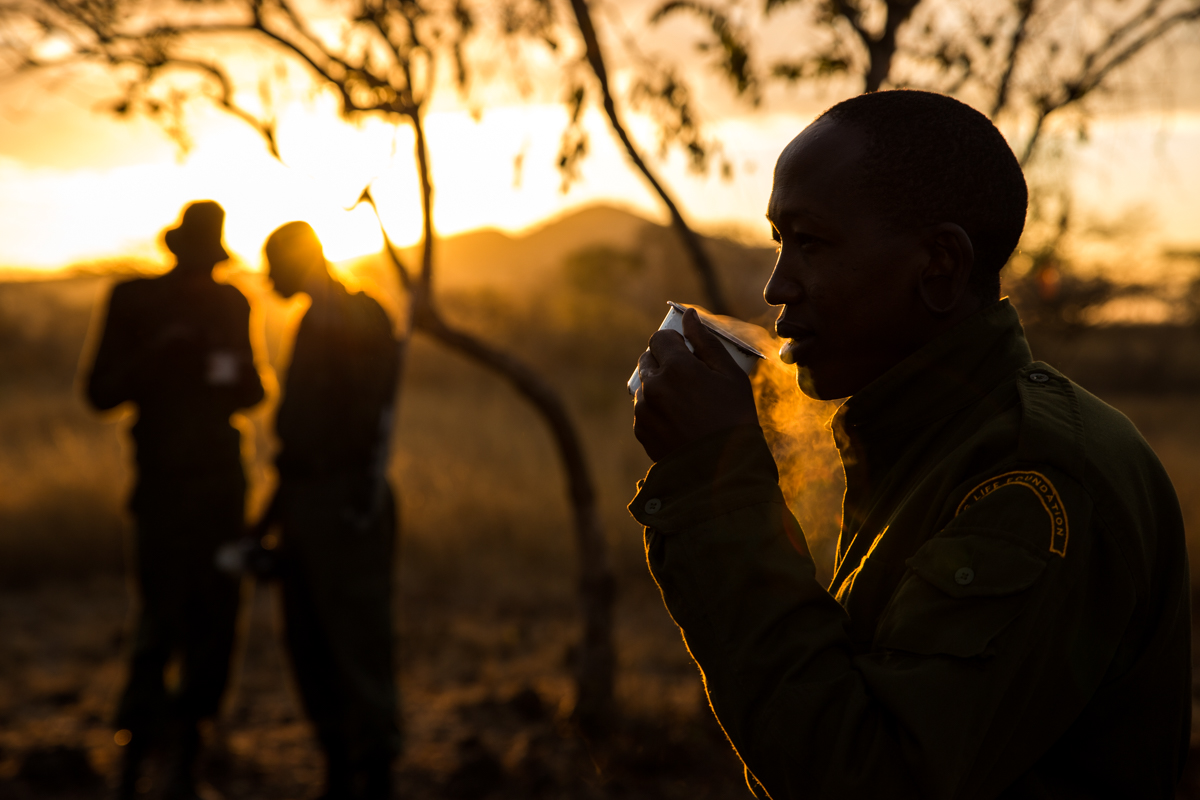
This first image shows the start of the third day of the search, which began (as all do) with a cup of overly sweet and burning hot tea.
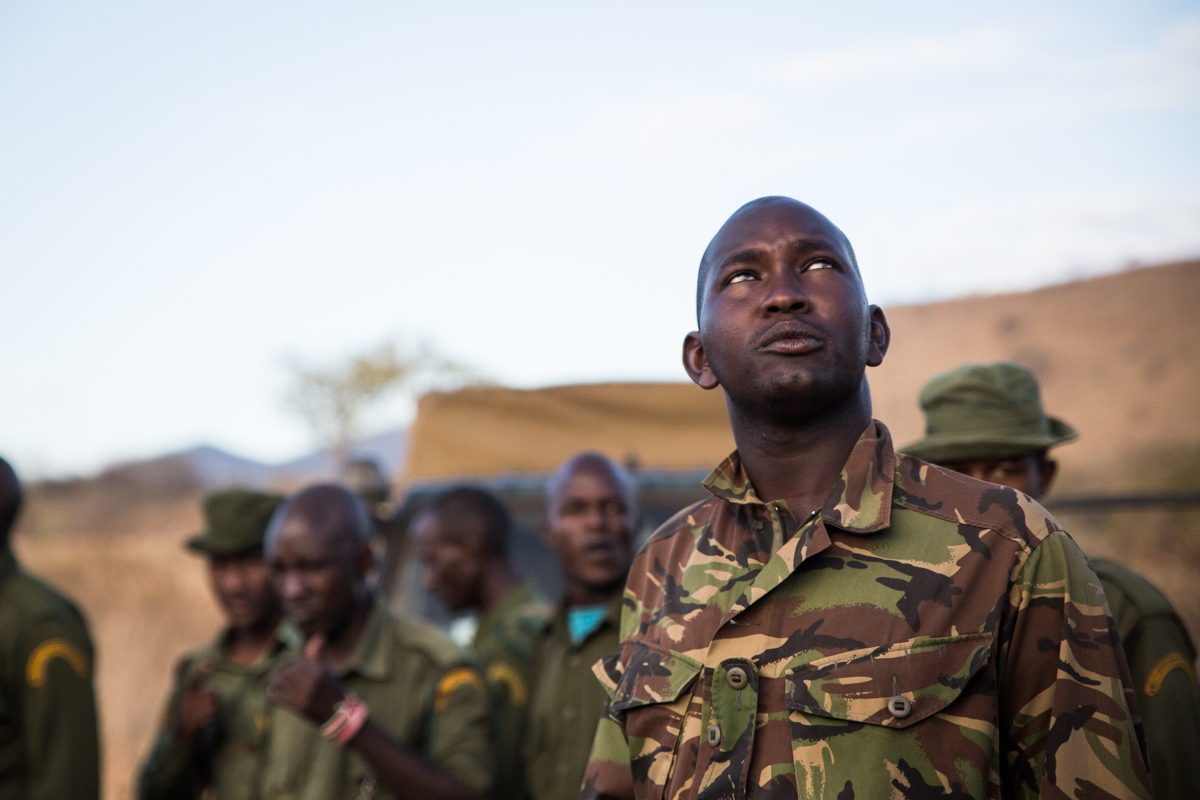
Each morning a spotter plane flew over the area where Bahati was suspected to be. Equipped with thermal imaging, the spotter was seeing buffalo, elephant, even guineafowl, but never spotted Bahati. Here a ranger looks up at the plane flying over in the cool of pre-dawn.

We had a basic idea of Bahati’s territory, but at times it was a bit like searching for a needle in a haystack. The first thing the rangers did each morning was to check the water points in the hope that Bahati had drunk the night before, leaving a fresh set of tracks to follow. This never happened though, the black rhinos in this area get a huge amount of moisture from succulent plants and only need to drink every couple of weeks. Very frustrating when you’re trying to find one!
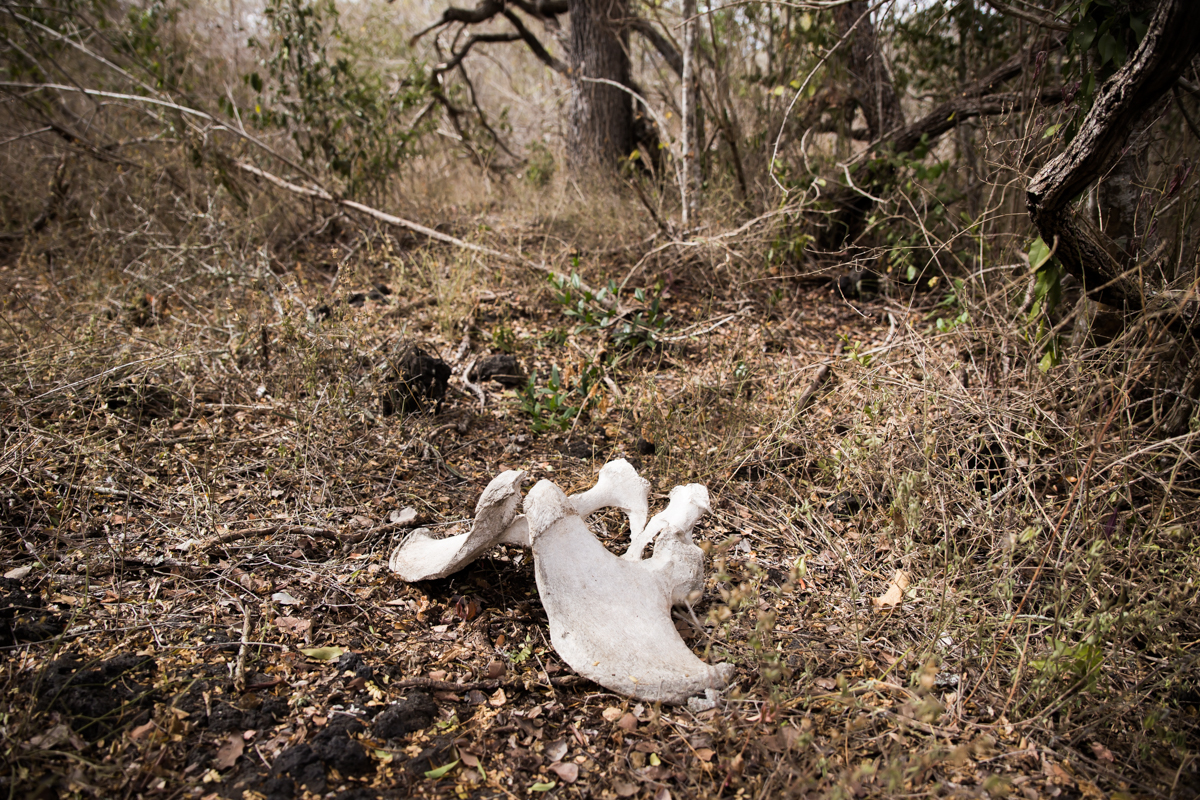
The search took one ranger unit past the pelvis of another black rhino that died during an operation to remove a snare in 2013, a reminder to the rangers of the urgency of the task. With each day the chances of successfully treating Bahati were getting smaller and smaller.
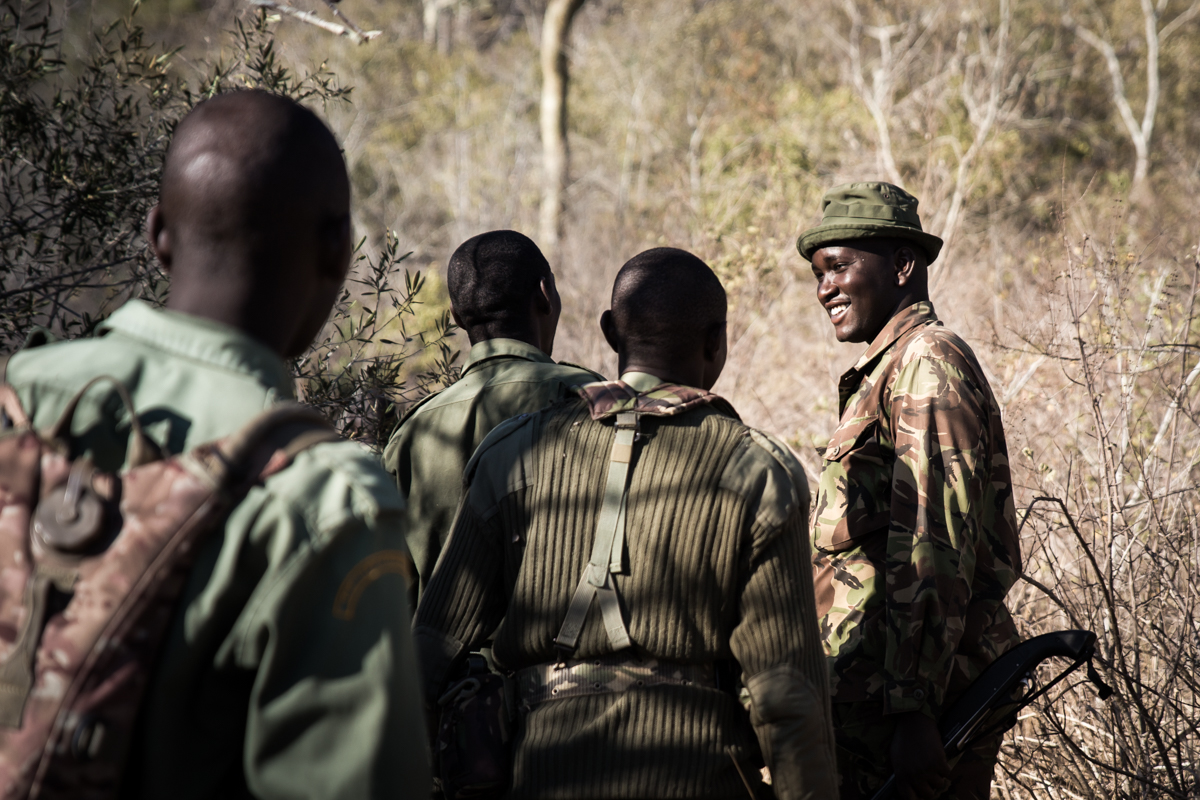
Tracking through thick bush puts a mental strain on the rangers. There were lots of elephants around, we could hear them and we could smell them, but could never see them. You can’t let your concentration lapse for a minute, and it’s important that the experienced guys in the team know when to take a break or crack a joke to relieve the tension.

Tracking over the lava fields was near impossible at times. The rangers had to rely on signs of feeding, and overturned rocks, as well as intuition as to which way Bahati was heading and thus where to pick up the track further along.
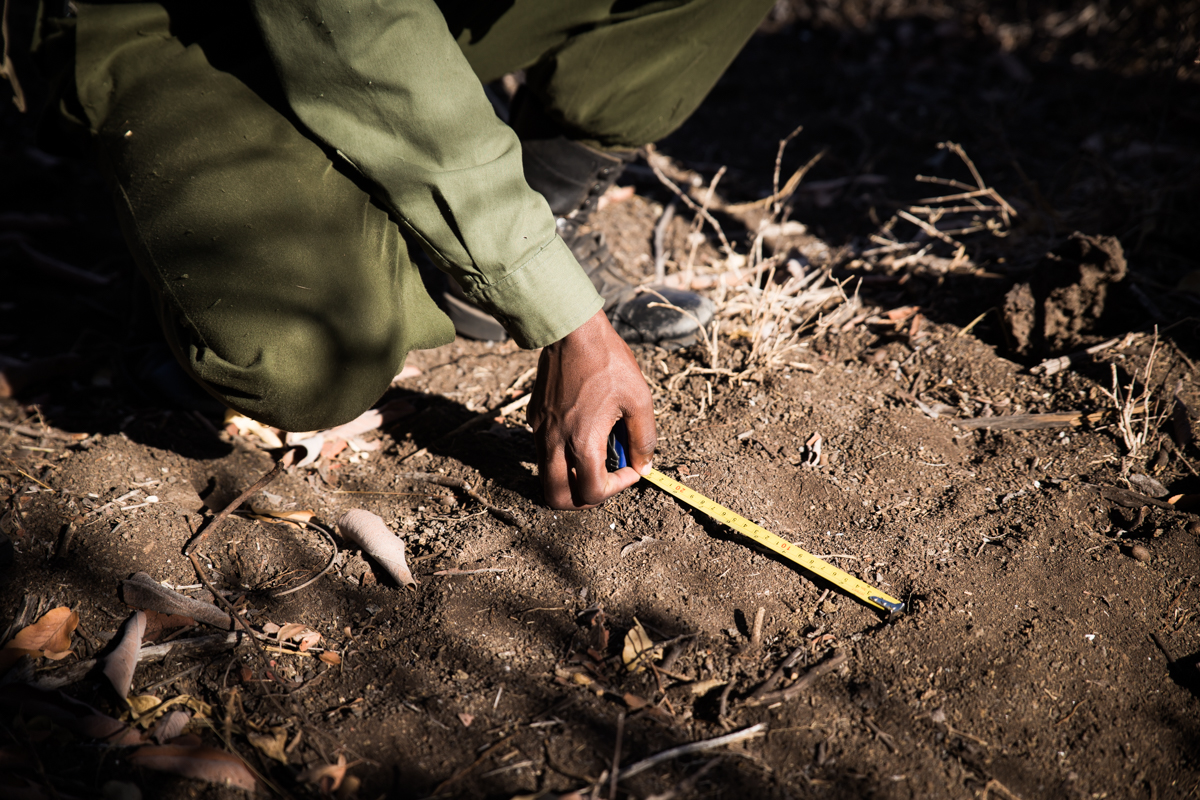
With a small population in this part of Kenya, each rhino is known by the size of its track. Here a ranger measures a fresh rhino track, which unfortunately turns out not to be Bahati’s.
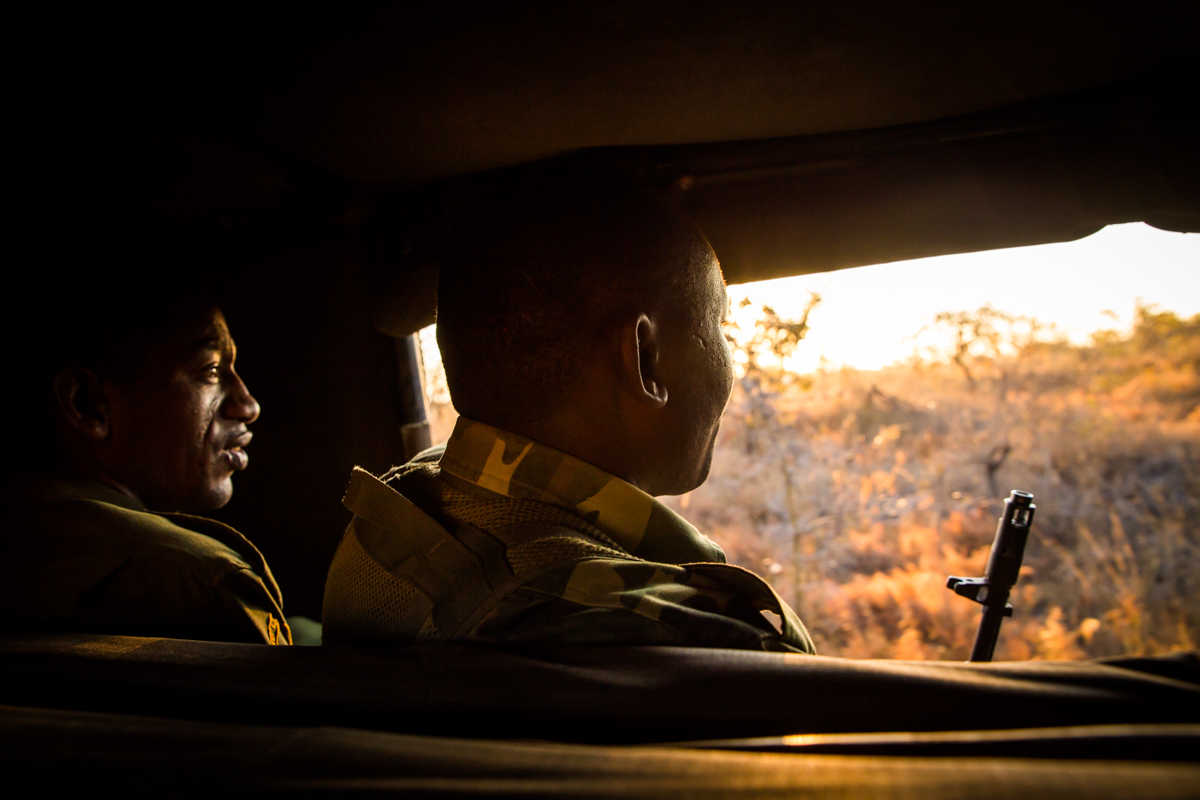
This was the morning of the last day of the search for Bahati. Each day the rangers left base camp in vehicles, then broke into teams to search different areas for tracks. It’s hard to describe the feeling of the early morning. The rangers were effectively starting from scratch, full of hope but knowing that each day was a race against time to find him. 3pm was the cut-off, even if we found Bahati after that it was too late to mobilise the helicopter and try to get a dart in.
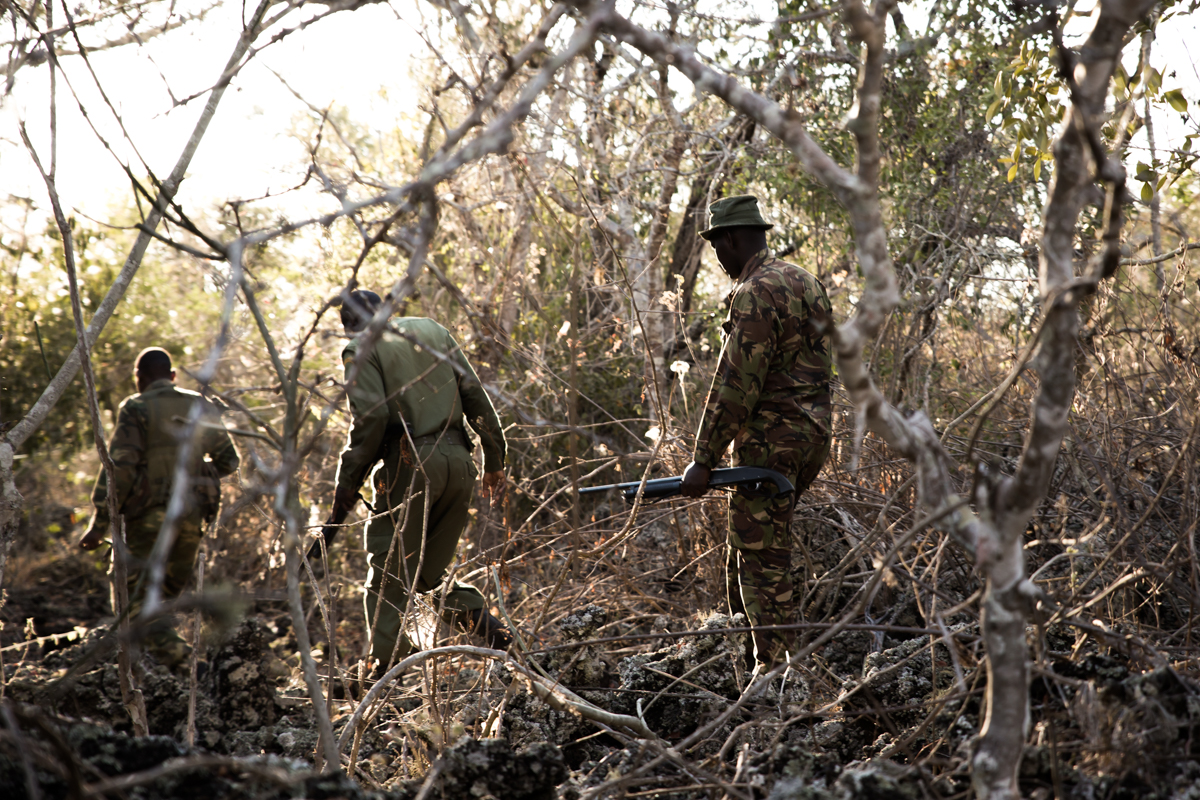
The bush in the Chyulu hills is dense and unfriendly, I was woefully underprepared in shorts and ended up looking like I had a run in with a herd of angry cats. I didn’t deserve nor get much sympathy.
The rangers needed to be highly aware to spot signs of Bahati the rhino in this terrain, particularly as much of it is ancient rocky lava flows. This was mid-morning day 4 of the search, still no sign found by any of the teams. The temperature building, stuffy and sweaty. Flies buzzing.
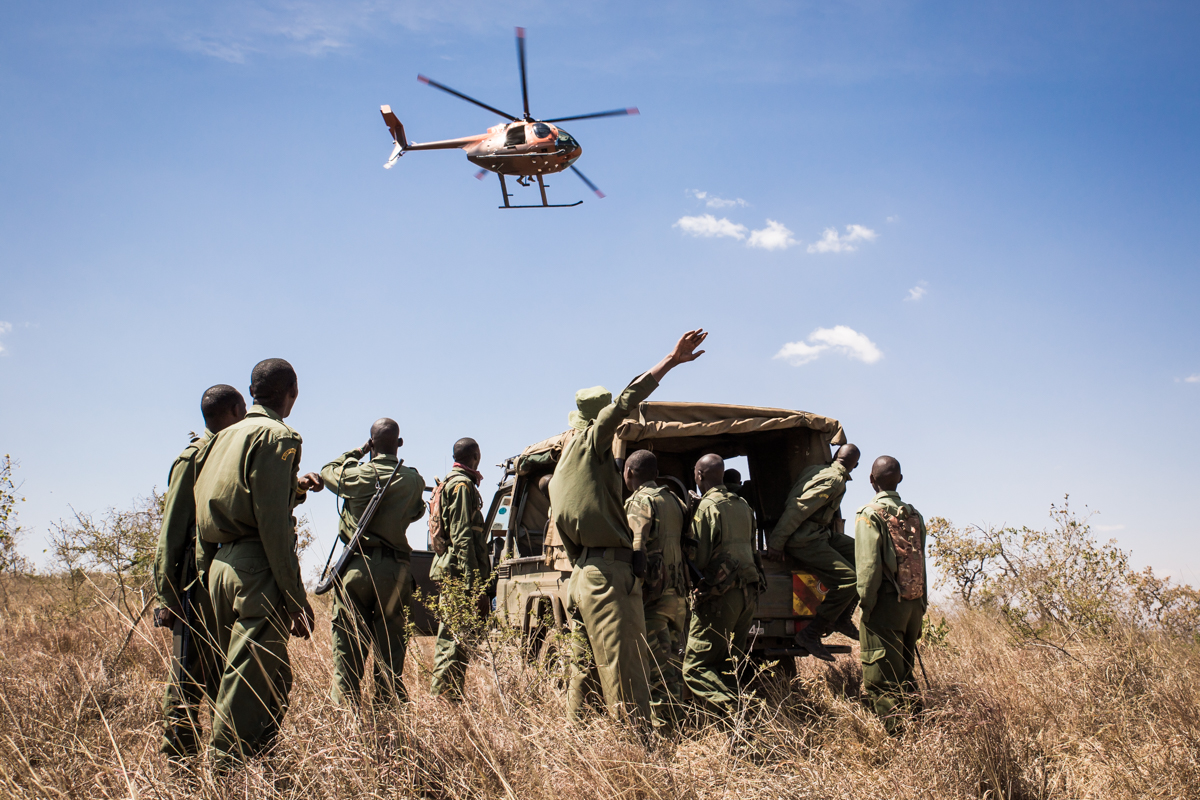
Late morning on day 4 the rangers picked up tracks of Bahati, including fresh blood. A team got on it, just a few men to minimise the chance of spooking the rhino. We eventually found him deep in a lava forest and immediately called the chopper in. The noise did spook Bahati; he ran and we climbed trees, fast.
The vet did a great job to get a dart into him through the thick bush. Bahati went down, and there was elation among the rangers, handshakes, hugs and beaming smiles. Then the radio call came – Bahati hadn’t made it. Tragically, the combination of the wound and stress of the darting process were too much. Bahati succumbed to his injuries.

There was silence, no-one could speak. It was desperately sad and a very emotional moment for the guys who had put so much into finding this little rhino, and come so close to saving him.
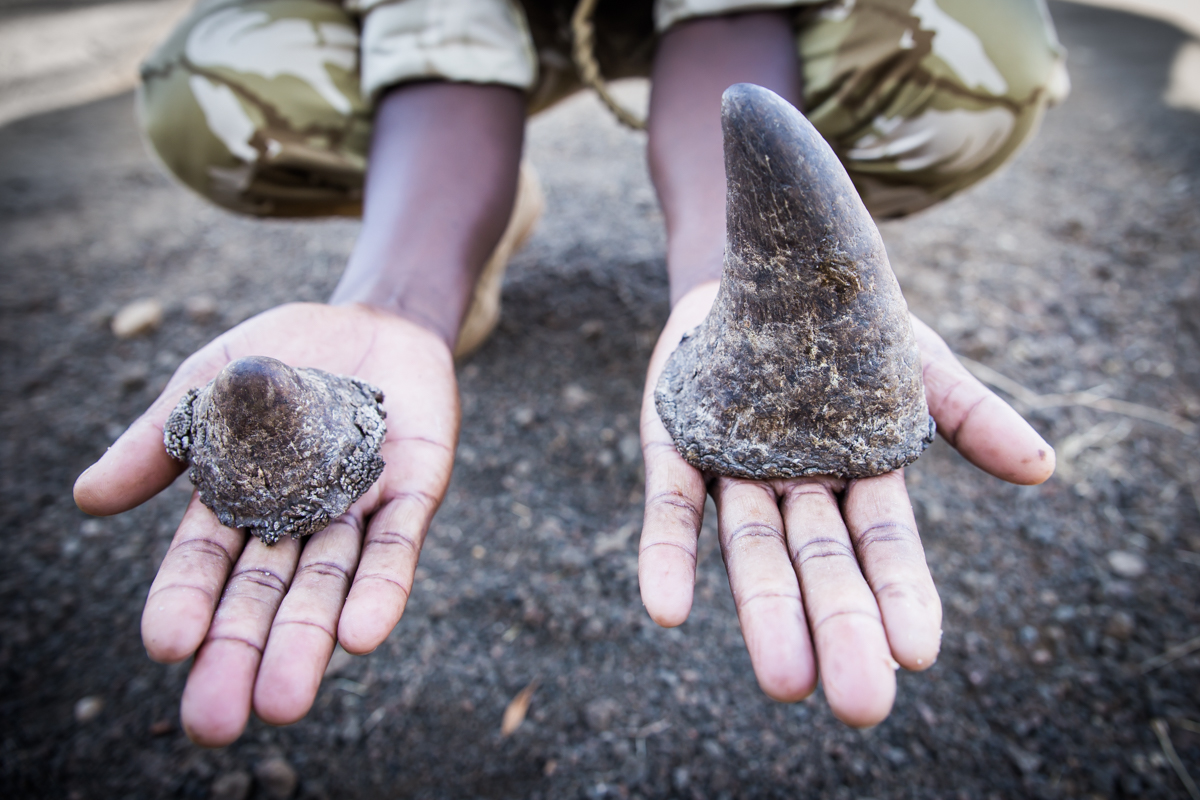
I was sorry to end the story with the above photo, but this is the reality, this is the reason that he died. Just one of the many similar stories that play out across Africa each day. But here in Kenya, it was inspiring to see so many organisations come together in the attempt to rescue one of the few rhinos alive in this small corner of East Africa. Rangers from the Kenya Wildlife Service (KWS) and Big Life Foundation worked tirelessly to find Bahati, with aerial and/or veterinary support from the Tsavo Trust and David Sheldrick Wildlife Foundation.
In the week following Bahati’s death the sadness turned to black anger for me. But there is nowhere to direct it, it’s a faceless and foreign ignorance that is driving the demand for these pieces of horn, made of a similar substance as your fingernails. Happily, there are some amazing groups now working to reduce this demand, and I can only hope that they succeed. In the meantime, it’s up to the rangers of Africa to pull as many rhinos through this crisis as possible.
Location: Chyulu Hills, Tsavo-Amboseli Ecosystem, Kenya
Photography: Jeremy Goss


